







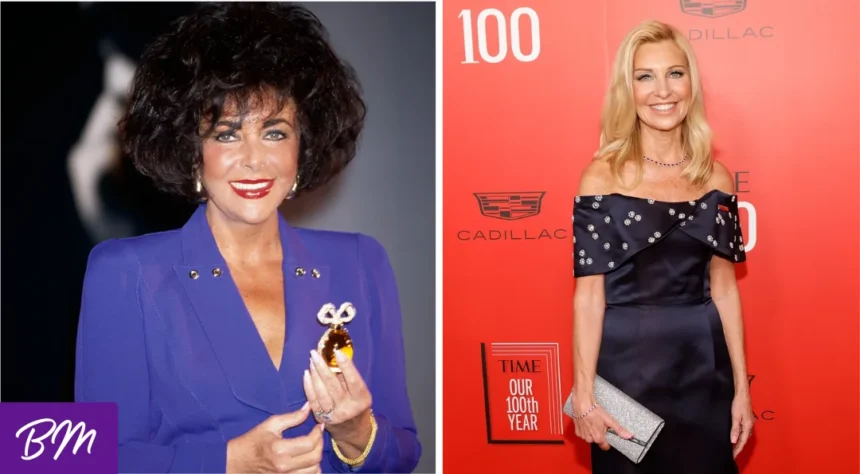
Karen Lynch and Elizabeth Taylor appear together in a growing number of online searches, yet the paired names do not point to a documented relationship. Karen S. Lynch is an American healthcare executive who led CVS Health from 2021 to 2024. Elizabeth Taylor was a British-American movie star and HIV/AIDS activist who died in 2011. After reviewing official corporate histories, regulatory filings, award records, estate materials, and nonprofit histories, no credible public record establishes that they were relatives, friends, colleagues, or charitable partners.
That finding does not make the search meaningless. Instead, it makes careful identification essential. The two women influenced public conversations about health through entirely different forms of power: Lynch through corporate healthcare leadership and Taylor through fame, fundraising, testimony, and philanthropy. This article explains the evidence, profiles each woman separately, and shows where a comparison is reasonable without turning similarity into a fictional connection.
The Short Answer About Karen Lynch and Elizabeth Taylor
There is no verified family or professional connection between Karen Lynch and Elizabeth Taylor in the public record reviewed through August 11, 2026. Moreover, their official biographies do not mention one another. In addition, no reliable account places them in the same company, film, foundation, campaign, family, or public event.
The most accurate answer is therefore straightforward: they are two separate public figures. Lynch became known through accounting, insurance, and the leadership of CVS Health. Taylor became known through a long acting career, business ventures, and pioneering HIV/AIDS activism.
Their lives overlapped in time because Lynch was already working in healthcare before Taylor died. However, chronological overlap does not prove personal contact. Therefore, any article that describes a secret friendship, family tie, or collaboration needs evidence beyond the appearance of both names in a search query.
What the Public Record Does and Does Not Show
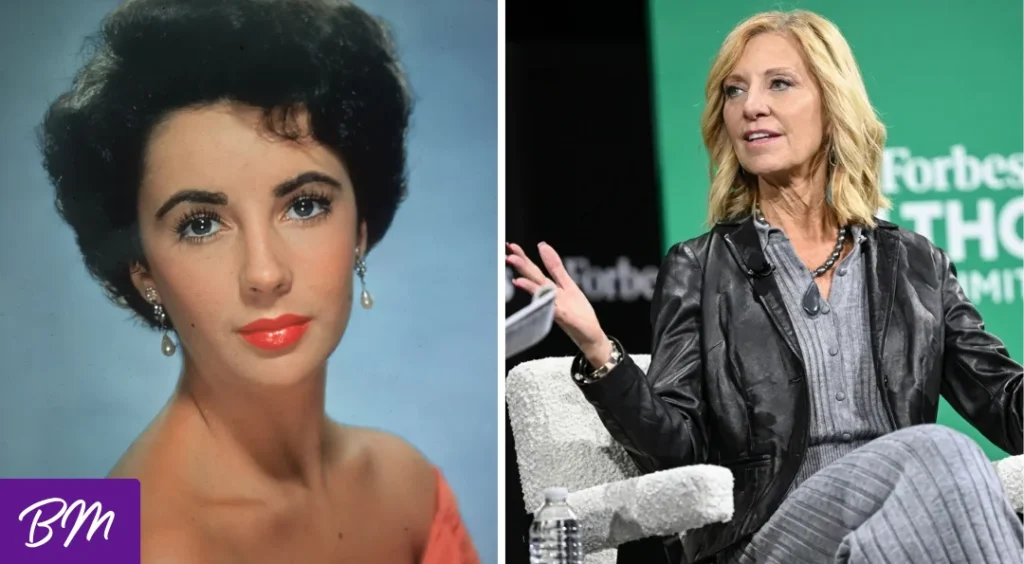
First, the record shows that Lynch served as president of Aetna and later as president and CEO of CVS Health. It also shows that Taylor won two Best Actress Oscars and established a foundation focused on HIV/AIDS services and advocacy.

By contrast, the record does not show a shared employer, board, charity, production, marriage, or relative. Taylor’s documented immediate family does not include Karen Lynch. Likewise, Lynch’s official career history does not include Taylor, her estate, or the Elizabeth Taylor AIDS Foundation.
Proving that two public figures never met anywhere would require impossible access to every private moment. Therefore, the responsible wording is not “they definitely never crossed paths.” It is “no credible public evidence establishes a relationship.” That distinction keeps the conclusion strong without pretending to know more than the sources can demonstrate.
Karen Lynch and Elizabeth Taylor Identity Check
First, readers must identify the correct Karen Lynch. In this search context, recent pages generally appear to mean Karen S. Lynch, the former CVS Health chief executive. Still, Karen Lynch is a shared name, and search engines may combine records belonging to unrelated people.
By contrast, Elizabeth Taylor presents less ambiguity because her public identity is unusually distinctive. She was the London-born actor associated with National Velvet, Cleopatra, Who’s Afraid of Virginia Woolf?, major jewelry and fragrance ventures, and decades of AIDS activism.



Once both identities are fixed, the supposed joint biography falls apart. Their professions, family records, and institutional histories remain separate.
Side-by-Side Verified Facts
| Point | Karen S. Lynch | Elizabeth Taylor |
|---|---|---|
| Public field | Healthcare and corporate leadership | Film, business, and humanitarian advocacy |
| Born | 1963 in Massachusetts | February 27, 1932, in London |
| Best-known role | CVS Health president and CEO, 2021–2024 | Two-time Best Actress Oscar winner |
| Earlier path | Accounting, insurance, Aetna leadership | Child actor, MGM star, international celebrity |
| Health-related influence | Insurance, pharmacy, care delivery, corporate strategy | HIV/AIDS awareness, research fundraising, direct-service philanthropy |
| Status in 2026 | Former CVS CEO and corporate director | Died March 23, 2011; legacy continues through films, estate, and foundation |
| Verified connection to the other | None found | None found |
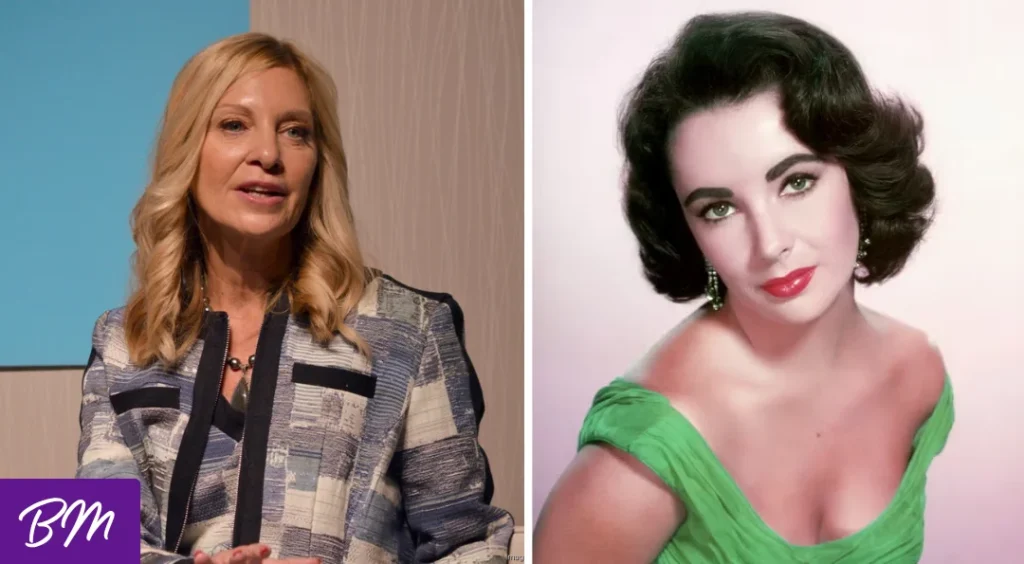
The last row is the key. Shared visibility and a broad connection to health do not create a relationship. Instead, they provide a limited basis for comparison.
Why Are Karen Lynch and Elizabeth Taylor Searched Together?
However, no authoritative source explains why the exact phrase began circulating. Consequently, any precise origin story would be speculation. It may have started with an accidental entity pairing, a keyword tool, a misunderstood name, or one low-quality page that other sites imitated.
Moreover, search demand can become self-reinforcing. A page publishes because users appear to search a phrase. Then, its presence encourages more searches, autocomplete associations, and copied articles. Eventually, the volume makes the pairing look historically meaningful even when no original event supports it.
The safest approach is to treat the query as a question, not a fact. “Karen Lynch and Elizabeth Taylor” asks whether a connection exists; it does not prove one.
Search Association Is Not Biographical Evidence
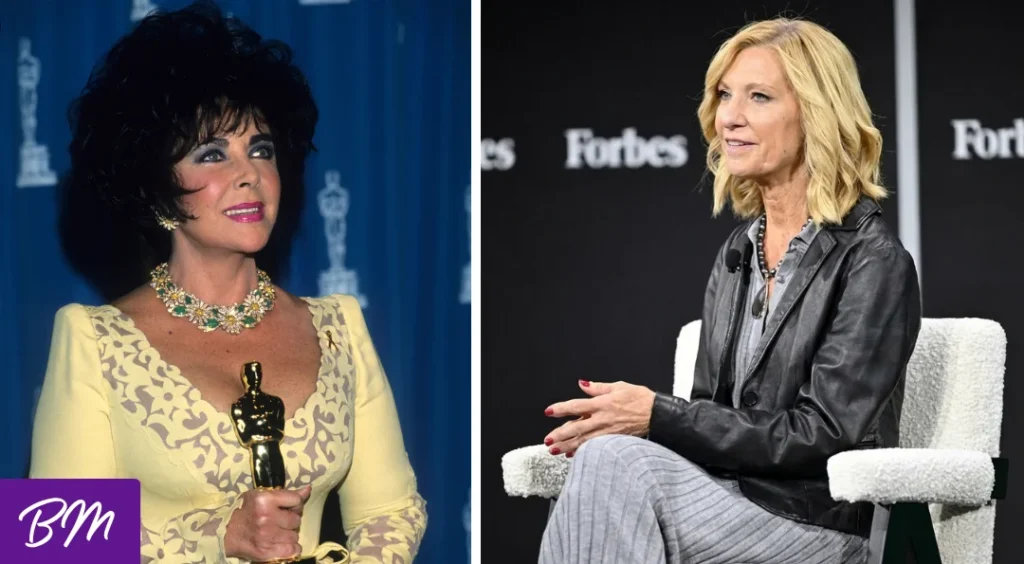
Search engines rank patterns, not truth claims. They may place two names together because users type them together, pages repeat them, or language models predict an association. None of those mechanisms requires a verified relationship.
By contrast, reliable biographical evidence looks different. It includes contemporaneous reporting, official event programs, employment records, foundation reports, correspondence, photographs with context, interviews, or family documentation. In this case, those stronger forms of evidence do not establish a link.
Therefore, the search results themselves should not serve as the source for the story they imply. A claim repeated across several derivative pages may still trace back to no primary evidence at all.
The Risk of a Karen Lynch Name Mix-Up
In addition, “Karen Lynch” can refer to more than one person. Without the middle initial, employer, date, or profession, a photo archive or database result may belong to an entirely different Karen Lynch. Moreover, an image search may group people through captions that contain separate names rather than depict a shared event.
The healthcare executive is Karen S. Lynch. Her documented career includes Ernst & Young, Cigna, Magellan Health, Aetna, and CVS Health. A supposed entertainment credit or social photograph needs independent confirmation before anyone attaches it to her.
This name-collision problem likely contributes to confusion, although the exact cause of the paired keyword remains unknown.
Testing the Claimed Karen Lynch Elizabeth Taylor Connection
Therefore, a reliable connection should survive several basic tests. Family records should show kinship, career histories should reveal a shared institution, or dated reports should document a meeting or project. The Karen Lynch Elizabeth Taylor connection does not pass those tests based on the sources available.
This does not mean the women lacked any common concern. Both addressed health in public life, but they did so through different systems and in different eras. The following checks separate that broad thematic overlap from an actual relationship.
Is There a Family Relationship?
For example, Taylor had four children: Michael Wilding Jr., Christopher Wilding, Liza Todd, and Maria Burton. Her widely documented parents, brother, marriages, children, and grandchildren do not place Karen S. Lynch within the family.
Meanwhile, Lynch came from Massachusetts and has publicly discussed the aunt who helped raise her after severe losses in her childhood. Nothing in that account connects her family to Taylor’s British-American entertainment family.
Accordingly, there is no credible basis for calling Lynch Taylor’s daughter, niece, cousin, or in-law. A distant relationship can never be disproved without complete genealogical records, but no reputable source asserts one.
Did Their Professional Careers Intersect?
By contrast, Taylor worked in movies, television, theater, brand licensing, and philanthropy. Lynch built her career in accounting, insurance, pharmacy benefits, and large healthcare organizations. Their official résumés contain no shared employer or project.
At the same time, Taylor did interact with politicians, physicians, corporate sponsors, researchers, and nonprofit leaders through AIDS advocacy. However, broad networks do not justify inserting an individual into the story without a dated record. Research found no reliable report of Lynch advising Taylor, employing her, representing her, or joining one of her productions.
Thus, the professional test produces the same result as the family test: no verified intersection.
Did They Work Together on HIV/AIDS Causes?
At first, this question offers the most plausible area to investigate because Lynch worked in healthcare and Taylor became a leading AIDS activist. Nevertheless, official histories do not identify a collaboration.
Taylor helped build institutions that supported HIV/AIDS research, services, education, and anti-stigma work. Lynch’s public career centered on commercial healthcare operations and later corporate leadership. Although large insurers and pharmacy companies operate in areas relevant to HIV treatment, an industry connection is not a personal partnership.
Furthermore, no credible source reviewed names Karen S. Lynch as a Taylor foundation officer, grantee partner, campaign participant, adviser, or event collaborator. Therefore, readers should not convert shared subject matter into shared work.
Does Their Timeline Reveal a Meeting?
First, Taylor died on March 23, 2011. By then, Lynch had already built a substantial insurance career and had served as president of Magellan Health. Their adult careers therefore overlapped for years.
Yet the leadership roles most often associated with Lynch came later. She joined Aetna in 2012, became its president in 2015, and became CVS Health CEO in 2021. Those dates make some online narratives chronologically impossible, especially claims that Taylor knew Lynch as the leader of CVS.
A compatible timeline can allow a meeting, but it cannot demonstrate one. Here, no dated event or reliable first-person account fills that evidentiary gap.
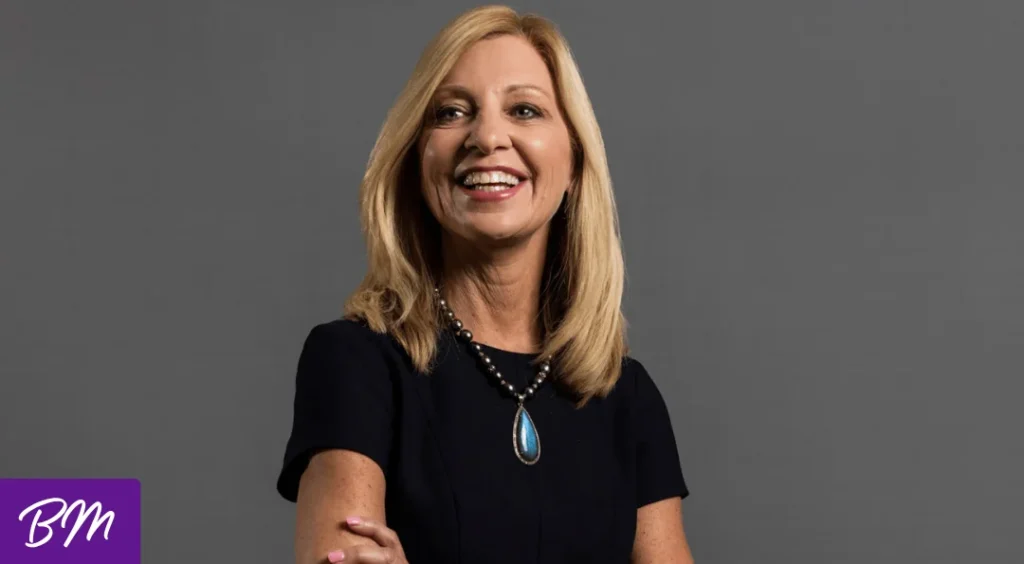
Karen S. Lynch Career File
Karen S. Lynch became one of the most prominent women in American corporate healthcare. At first, her path focused on accounting rather than medicine or pharmacy, which gave her a technical foundation in financial reporting and regulated businesses.
Over more than three decades, she moved through insurance organizations and increasingly complex leadership assignments. Eventually, she ran a company that combined retail pharmacies, pharmacy-benefit management, insurance, clinics, and other health services.
Her career explains why her name belongs in healthcare and business coverage. It does not, however, create an entertainment or Taylor-family biography.
From Accounting to Healthcare Leadership
Lynch graduated from Boston College in 1984 and later earned an MBA from Boston University. She started as a certified public accountant at Ernst & Young’s predecessor firm, where work involving insurers helped her learn the industry’s financial structure.
She later moved into Cigna and held leadership roles at Magellan Health. Those positions brought together finance, operations, and the difficult realities of navigating medical coverage. The path was cumulative: accounting led to insurance expertise, which led to executive responsibility.
A detailed Boston College profile of Karen Lynch also records how family experiences with mental illness, cancer, and a confusing healthcare system shaped her stated interest in improving access. That personal motivation belongs to her own story, not to Elizabeth Taylor’s.
Aetna and the Route to CVS Health
Lynch joined Aetna in 2012 and became president in 2015. As president, she oversaw major insurance businesses and became the first woman to hold that position in the company’s long history.
In 2018, CVS Health acquired Aetna. After the transaction, Lynch remained president of the Aetna business and became an executive vice president of CVS Health. Therefore, she entered the parent company’s top leadership through the insurer rather than through its retail pharmacy operation.
That distinction matters because it explains her later strategy. She approached healthcare as a connected system involving payment, pharmacies, local access, data, home services, and primary care.
Karen Lynch CVS Health CEO Years
Finally, Lynch became CVS Health president and CEO in February 2021. The company’s official CVS Health history records her appointment and also records David Joyner’s succession in 2024.
During her tenure, CVS continued moving beyond the traditional drugstore model. The company completed its acquisitions of Signify Health and Oak Street Health in 2023, expanding home-based services and primary-care operations. Meanwhile, it managed insurance costs, pharmacy services, retail pressures, and the aftermath of the COVID-19 emergency.
As a result, these initiatives made Lynch highly visible in corporate rankings and business media. Still, executive prominence should not be confused with a permanent title: she is the former, not current, CVS Health CEO.
Why Her CVS Tenure Ended in 2024
On October 17, 2024, CVS Health appointed David Joyner as president and CEO, replacing Lynch. The company’s 2025 filing with the U.S. Securities and Exchange Commission says the board made the decision unanimously after a process that considered internal and external candidates.
At the same time, the transition occurred while CVS faced operational and financial pressure, particularly in its insurance business. However, an evidence-based profile should distinguish those documented challenges from speculation about private board discussions.
Lynch provided advisory services for six months after her departure under a letter agreement. By 2026, readers should describe her CVS role in the past tense.
Karen Lynch Board Roles in 2026
However, leaving CVS did not end Lynch’s corporate work. Thermo Fisher Scientific identifies her as a director since 2025 and highlights her experience in healthcare, accounting, public-company governance, acquisitions, and regulated industries.
The current Thermo Fisher Scientific board biography also lists ADP as another directorship. Accordingly, her 2026 profile is that of a former operating chief who now contributes experience through board governance.
No current board biography reviewed connects that work with the Elizabeth Taylor estate or foundation.
Personal Experience Behind Her Healthcare Focus
For example, Lynch has spoken publicly about losing her mother to suicide when she was young and later caring for the aunt who raised her during the aunt’s cancer. She has said that struggling to navigate the system contributed to her interest in changing healthcare.
Consequently, those experiences help explain her attention to mental health and access. At the same time, readers should avoid converting personal tragedy into proof that every corporate decision achieved its stated goal. Executive strategy deserves evaluation through outcomes as well as biography.
Most importantly for this keyword, her motivation developed within her family and career. No reliable account attributes it to Taylor.
Elizabeth Taylor Career File
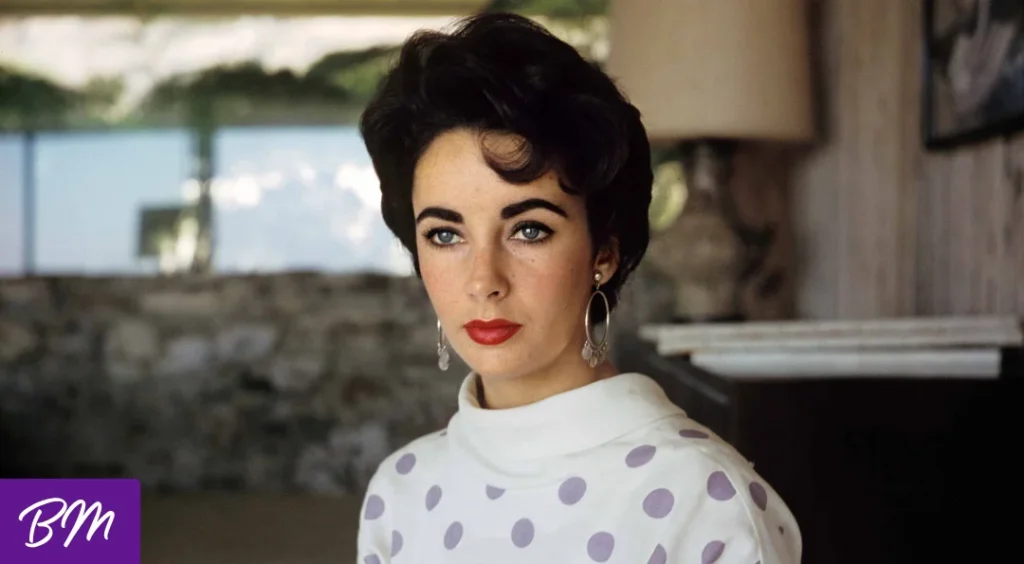
Elizabeth Taylor reached international fame long before celebrity branding became a standard business model. Born in London to American parents, she moved with her family to California as war approached and began acting as a child.
Moreover, her career lasted more than six decades. During that time, she moved from family films to adult drama, became one of the world’s most photographed stars, challenged studio-era expectations, and built commercial ventures around her name. Later, she redirected much of her public power toward HIV/AIDS advocacy.
Her official Elizabeth Taylor biography presents those phases as parts of one life: actor, businesswoman, collector, patient, fundraiser, and activist.
From Child Actor to Hollywood Star
Taylor appeared in Lassie Come Home and became a major child star through National Velvet. Unlike many young performers, she made a successful transition to adult roles. Films such as A Place in the Sun, Giant, and Cat on a Hot Tin Roof showed an increasingly forceful dramatic presence.
By the early 1960s, her fame extended beyond acting. The production of Cleopatra, her relationship with Richard Burton, and unprecedented salary coverage made her a global media figure. Yet the spectacle sometimes obscured the discipline of her best work.
Her later reputation rests on both elements: star image and performance. The broad Wikipedia biography of Elizabeth Taylor offers readers a useful gateway to her films, awards, family, health history, business ventures, and activism.
Elizabeth Taylor Oscar Record
Taylor received five competitive Best Actress nominations. She won for BUtterfield 8 and later for Who’s Afraid of Virginia Woolf? Her transformation into Martha in the latter film remains one of the central examples of her willingness to disrupt her glamorous public image.
The official Academy Awards record for Elizabeth Taylor lists those two wins, three other acting nominations, and the Jean Hersholt Humanitarian Award.
Therefore, “three Oscars” needs context. She received two for acting and one honorary humanitarian award. Keeping the categories clear respects both her craft and her advocacy.
Richard Burton, Public Fame and Family Facts
Taylor married eight times to seven men because she married Richard Burton twice. Their relationship became a defining celebrity story, yet it also produced important screen collaborations, including Who’s Afraid of Virginia Woolf?
In addition, she had four children. Michael Wilding Jr. and Christopher Wilding were her sons with Michael Wilding. Liza Todd was her daughter with Mike Todd, and Maria Burton was adopted. Richard Burton adopted Liza and Maria.
Consequently, these well-documented relationships help resolve the keyword question. Karen S. Lynch does not appear in Taylor’s immediate family history. Claims that cast her as a hidden daughter or relative conflict with the established record.
Elizabeth Taylor Business Influence
Taylor understood the commercial value of identity and image. Her jewelry collection became part of her public mythology, while her fragrances turned her name into a durable consumer brand. White Diamonds, in particular, outlived the conventional period of a film endorsement.
Business success gave her influence and resources beyond acting. However, her commercial work should not be confused with Lynch’s corporate career. Taylor licensed and developed products built around celebrity; Lynch managed regulated healthcare enterprises with hundreds of thousands of employees and complex insurance obligations.
Both operated at scale, but the underlying skills, institutions, and accountability structures differed sharply.
Elizabeth Taylor AIDS Activism
Taylor became publicly involved in the AIDS crisis when fear and misinformation remained widespread. She used her visibility to raise money, confront stigma, press political leaders, and keep attention on people whom much of society ignored.
Eventually, this work became as important to her legacy as her films. Moreover, it creates the strongest thematic reason to discuss Taylor in an article that includes a healthcare executive. Still, thematic relevance must remain separate from claims of direct cooperation.
The Formation of amfAR
In 1985, Taylor and physician Michael Gottlieb helped establish the National AIDS Research Foundation. That organization merged with the AIDS Medical Foundation associated with Dr. Mathilde Krim, creating the American Foundation for AIDS Research, commonly known as amfAR.
Taylor served as a founding national chair and brought exceptional media attention to the organization. She also testified, raised funds, and challenged public officials to address the epidemic.
Official histories identify the people and institutions central to that formation. Karen S. Lynch does not appear among them. Therefore, an article should not retrofit a later healthcare leader into Taylor’s documented 1980s activism.
The Elizabeth Taylor AIDS Foundation
Taylor founded the Elizabeth Taylor AIDS Foundation in 1991 to emphasize direct services, education, advocacy, and support for people living with HIV. She covered overhead so that donations could support programs, a commitment that strengthened the foundation’s public trust.
The official Elizabeth Taylor AIDS Foundation history documents work across the United States and internationally, partnerships, grants, mobile clinics, anti-criminalization advocacy, and the continuation of Taylor’s mission after her death.
That continuing institution should not be mistaken for evidence that every prominent healthcare executive worked with Taylor. No approved source identifies Lynch as an ETAF officer or collaborator.
Why Her Advocacy Changed Celebrity Activism
Taylor acted when association with AIDS could carry social and professional risk. Her celebrity drew cameras, but she used the attention to center research, care, and human dignity. As a result, she demonstrated that a public figure could do more than appear at a benefit.
Furthermore, she testified before lawmakers, confronted presidential silence, helped form institutions, and remained involved over decades. Her approach combined emotional visibility with organizational commitment.
That model influenced later expectations of celebrity advocacy. Nevertheless, it remained distinct from corporate healthcare management. Taylor did not run an insurer, and Lynch did not build her public identity as a Hollywood fundraiser.
The Only Responsible Comparison Between the Two Women
Karen Lynch and Elizabeth Taylor both affected conversations about health, but they occupied different positions. Lynch held formal authority inside corporations that finance, organize, and deliver care. Taylor held cultural authority and used it to make a stigmatized health emergency harder to ignore.
This comparison can help readers understand how influence works. Institutional power changes operations, coverage, acquisitions, staffing, and access points. Cultural power changes attention, language, political urgency, and willingness to donate. Both can shape health outcomes, yet neither substitutes for the other.
Corporate Healthcare Power Versus Cultural Influence
As CVS CEO, Lynch could direct strategy across insurance, pharmacy benefits, retail locations, clinics, and acquisitions. Her decisions affected employees, patients, members, investors, and regulators. Therefore, her influence came with operational control and measurable corporate obligations.
By contrast, Taylor had no comparable corporate healthcare command. Instead, she could make news, attract donors, challenge stigma, and gain access to political leaders. She converted attention into institutions and funding.
The contrast is more informative than a fabricated friendship. It shows two routes through which a woman can shape a health-related public agenda.
Different Methods, Different Eras
Taylor’s AIDS activism emerged during the 1980s and 1990s, when public fear, discrimination, and government hesitation intensified suffering. Her central task involved forcing recognition and compassion while raising money for research and care.
Meanwhile, Lynch led CVS during the COVID-19 period and the years immediately after it. Her challenges involved vaccination, testing, behavioral health, insurance costs, pharmacy economics, retail pressure, and integration of acquired care businesses.
Because the eras and problems differ, claims that they followed the same mission oversimplify both stories. A narrow comparison around health influence is fair; a claim of shared work is not.
What Karen Lynch and Elizabeth Taylor Did Not Share
No verified record shows that the women shared a family, employer, board seat, film credit, foundation post, business venture, home, marriage connection, public campaign, or documented friendship. In addition, Taylor could not have known Lynch as CVS Health CEO because Taylor died nearly ten years before Lynch entered that role.
They also did not perform equivalent jobs. Lynch was accountable for a publicly traded healthcare corporation. Taylor was an actor, entrepreneur, and philanthropist who used celebrity to build support for a cause.
Finally, there is no reliable basis for combining their finances. Taylor’s estate and licensing arrangements differ fundamentally from Lynch’s disclosed executive compensation and private assets. Joint net-worth claims or precise personal totals would mislead readers.
How Paired-Name Misinformation Spreads
Paired-name searches create an unusual content trap. Writers may assume that a relationship must exist because the phrase has traffic. Then, instead of testing the premise, they produce a joint biography that places two accurate individual profiles beside an unsupported connection.
Moreover, artificial intelligence can intensify the problem. A system trained to produce fluent answers may bridge gaps with plausible language such as “shared advocacy” or “close friendship.” Once published, that invention becomes text another system can repeat.
Therefore, readers can interrupt the cycle by asking where, when, and through which institution the alleged connection occurred.
A Five-Step Verification Method
- Fix the identities. Add middle initials, professions, dates, and employers.
- Find the original claim. Do not count pages that merely copy one another.
- Check chronology. Confirm that the alleged roles existed at the same time.
- Look for institutional evidence. Search official biographies, filings, archives, foundation reports, and event records.
- Use proportionate language. If evidence is absent, say no credible public record was found rather than inventing certainty.
Applied here, the method identifies Karen S. Lynch and Dame Elizabeth Taylor correctly but finds no shared event or relationship.
Claims This Article Intentionally Excludes
This article does not assign either woman an estimated net worth. It does not name a secret friend, hidden relative, private adviser, or undocumented collaborator. It also does not treat an unlabeled image result as proof of a meeting.
In addition, it avoids suggesting that Lynch caused every CVS outcome personally or that Taylor single-handedly transformed the entire AIDS response. Both women operated within large networks of employees, activists, clinicians, researchers, communities, and institutions.
Excluding unsupported details does not weaken the article. Instead, it makes the verified achievements easier to see.
Two Separate Timelines, Not One Shared Story
| Period | Karen S. Lynch | Elizabeth Taylor |
|---|---|---|
| 1932–1960s | Not yet in public career | Born in 1932; child stardom; adult film breakthrough; first acting Oscar |
| 1960s–1980s | Education and early accounting path | Second acting Oscar; global fame; business development; AIDS activism begins |
| 1990s | Insurance career develops | Founds ETAF in 1991; receives 1993 humanitarian Oscar |
| 2000s | Senior healthcare leadership | Continues advocacy despite serious health problems |
| 2011 | Established insurance executive | Dies on March 23 at age 79 |
| 2012–2020 | Joins Aetna; becomes president; moves into CVS leadership | Estate and foundation continue her legacy |
| 2021–2024 | Serves as CVS Health president and CEO | ETAF continues programs and advocacy |
| 2025–2026 | Serves in corporate board roles | Films, estate, brand, and foundation remain active |
The table reveals overlap but no convergence. Their most important public roles unfolded along independent tracks.
Frequently Asked Questions
1. Are Karen Lynch and Elizabeth Taylor related?
No credible public record reviewed through August 11, 2026, identifies Karen S. Lynch and Elizabeth Taylor as relatives. Taylor’s documented immediate family does not include Lynch, and Lynch’s public family story does not connect her to Taylor.
2. Did Karen Lynch know Elizabeth Taylor?
No reliable source confirms a friendship, meeting, or personal acquaintance. Their adult lives overlapped, so an undocumented encounter cannot be ruled out absolutely. However, no evidence supports presenting one as fact.
3. Did Karen Lynch work for Elizabeth Taylor?
No. Lynch’s documented employers and leadership roles were in accounting, insurance, and healthcare. Taylor’s career and foundation records do not list Lynch as an employee, adviser, officer, or representative.
4. Who is Karen S. Lynch?
Karen S. Lynch is an American healthcare executive. She served as Aetna president and later as CVS Health president and CEO from 2021 until October 17, 2024. In 2026, she held corporate board roles.
5. Is Karen Lynch still CEO of CVS Health?
No. David Joyner replaced her as president and CEO on October 17, 2024. Therefore, current articles should describe Lynch as the former CVS Health chief executive.
6. Who was Elizabeth Taylor?
Elizabeth Taylor was a British-American actor, entrepreneur, and humanitarian. She rose from child stardom to become one of classical Hollywood’s defining stars and later became a pioneering HIV/AIDS activist.
7. How many Oscars did Elizabeth Taylor win?
Taylor won two competitive Best Actress Oscars, for BUtterfield 8 and Who’s Afraid of Virginia Woolf? She also received the Jean Hersholt Humanitarian Award, bringing her Oscar statuettes to three when that honorary award is included.
8. What did Elizabeth Taylor do for HIV and AIDS?
She helped create an organization that merged into amfAR, raised funds, testified before lawmakers, confronted stigma, and founded the Elizabeth Taylor AIDS Foundation in 1991 to support services and advocacy.
9. Why do websites pair Karen Lynch and Elizabeth Taylor?
The exact origin is not publicly verified. The phrase may reflect search-engine association, a name mix-up, or websites repeating a keyword after another page used it. Search repetition alone does not establish a relationship.
10. What do Karen Lynch and Elizabeth Taylor have in common?
Both became influential women whose public work touched healthcare. Lynch exercised corporate and operational power, while Taylor used cultural influence and philanthropy. That is a comparison between separate careers, not evidence that they collaborated.
Final Verdict on Karen Lynch and Elizabeth Taylor
Karen Lynch and Elizabeth Taylor do not have a verified family, personal, professional, or charitable relationship in the public record reviewed for this article. The paired keyword creates a question, but official histories and dated records answer it with two separate biographies.
Lynch built a career through accounting, insurance, Aetna, CVS Health, and corporate governance. Taylor built a career through film, brand entrepreneurship, and courageous HIV/AIDS activism. Their broad influence on health-related public life offers a thoughtful contrast between institutional authority and cultural power.
That contrast is valuable precisely because it does not require an invented connection. The authentic story is that two women, working in different eras and systems, reached enormous influence by very different routes.
Read more at Official Buzz Magazine