







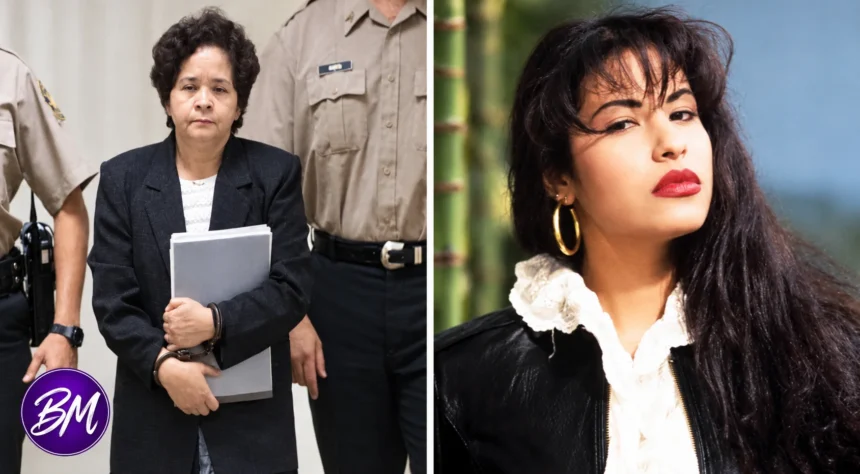
Prosecutors connected Yolanda Saldívar’s motive to accusations of missing money and the breakdown of her working relationship with Selena Quintanilla. They argued that the shooting was intentional. Saldívar maintained that it was accidental, but a jury convicted her of murder.
The documented explanation involves a business dispute, lost trust and Selena’s intention to end Saldívar’s employment. These circumstances provide a stronger basis for understanding the case than theories about jealousy or private emotions.
How Yolanda Saldívar Became Close to Selena
Before the killing, Yolanda Saldívar held positions that brought her into regular contact with Selena’s family and business.
She founded the singer’s fan club and later managed her Selena Etc. clothing boutiques. Those responsibilities gave her access to financial matters and made her part of Selena’s professional circle.
However, the relationship deteriorated when the family began questioning how she handled money. Someone they had trusted became the subject of increasingly serious concerns.
The Financial Complaints That Damaged Their Trust
Contemporaneous UPI trial reporting describes Abraham Quintanilla receiving complaints from fans who had paid membership fees but received nothing in return.



Abraham testified that he suspected Saldívar of taking money from the fan club. Family members also raised concerns about the boutique businesses she managed.
These were allegations presented during the murder proceedings. They should not be described as a separate theft conviction.
The significance to the murder case was the confrontation those suspicions created. By March 1995, the family’s concerns had changed Saldívar’s relationship with Selena and the people managing her career.
Why Selena’s Intention to Fire Her Mattered
The 1998 appellate opinion in Saldívar v. State directly addresses evidence about Selena’s intention to dismiss Saldívar.



Suzette Quintanilla testified about her sister’s plan to fire her. The appeals court considered that intention relevant to the state of the relationship and to establishing a motive for the shooting.
The court also distinguished Selena’s intended action from testimony about her belief that money had been stolen. It found an evidentiary error involving part of that testimony, treated the error as harmless and upheld the conviction.
This distinction helps explain the case accurately: the threatened end of their working relationship formed part of the motive evidence, while the financial accusations supplied important background.
What Did Saldívar Say About the Shooting?
Saldívar’s account differed sharply from the prosecution’s.
Her defense argued that the gun discharged accidentally. In a television interview after her conviction, reported by UPI in November 1995, she continued denying that she had deliberately killed Selena and denied stealing money.
The jury nevertheless found her guilty of murder. The appellate court later affirmed that conviction.
An accidental-shooting claim therefore remains Saldívar’s explanation, rather than the legal outcome of the case. Repeating her account without that distinction would leave readers with an incomplete understanding.
Does the Evidence Prove Jealousy Was the Motive?
Descriptions involving jealousy, obsession or fear of losing Selena often appear in discussions of the killing. However, those labels should not replace the documented circumstances.
The clearest evidence concerns financial suspicions, damaged trust and Selena’s intention to end Saldívar’s employment. Prosecutors used that deteriorating relationship to explain why the confrontation became relevant to their murder case.
A motive explains a proposed reason for an action. The conviction established criminal responsibility for the killing; it did not provide a complete account of every emotion Saldívar experienced.
The most defensible answer therefore keeps the prosecution’s explanation clearly attributed instead of presenting speculation as a psychological finding.
The Conviction and the Family’s Continuing Loss
Saldívar was convicted of murder on October 23, 1995, and received a life sentence. In March 2025, Texas authorities denied her parole and scheduled another review for 2030.
That review date does not guarantee her release.
For Selena’s relatives, the consequences extended far beyond the courtroom. Suzette later explained that losing her sister changed how she felt about drumming and performing, while her work shifted toward preserving Selena’s legacy.
The family story has also continued through younger relatives, including Suzette’s son, Jovan Arriaga, who was born after Selena’s death. His connection to his aunt belongs to the generations that encounter her through family history, recordings and archives.
Understanding Saldívar’s motive requires attention to the evidence. Remembering Selena also means recognizing the music, relationships and future that the killing interrupted.
Explore more carefully researched music and family stories through Official Buzz Magazine, with coverage that follows the lives behind familiar headlines.