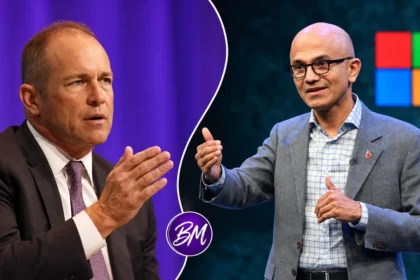





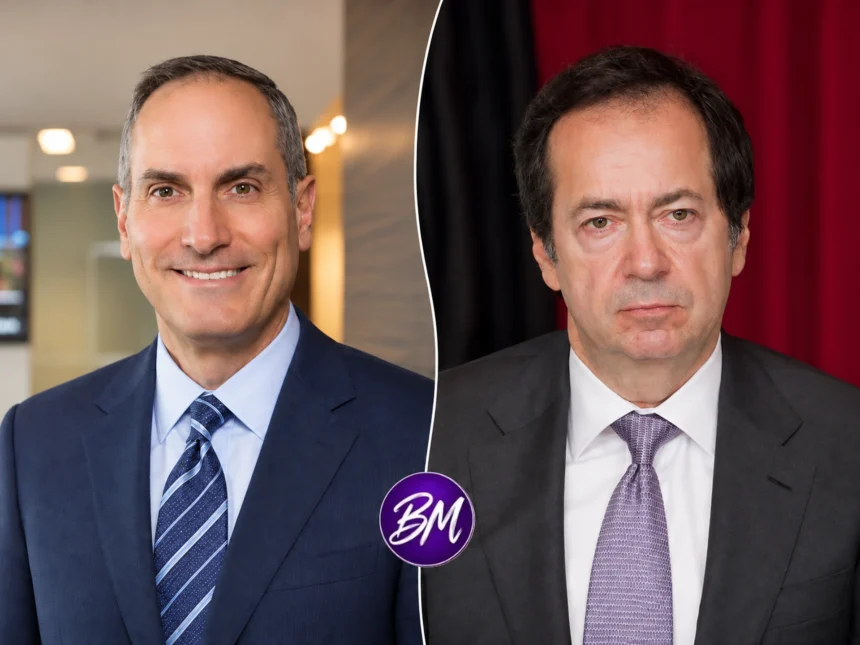
Andy Cecere and John Paulson approached banking from different seats. As CEO of U.S. Bancorp from 2017 to 2025, Cecere changed where and how U.S. Bank served customers. The bank reduced its branch count as more people banked by phone and expanded in selected markets. Paulson took positions in mortgage securities and bank stocks as a hedge fund manager. His most direct connection to bank branches came in 2009, when an investor group he joined acquired the operations of failed lender IndyMac and reopened its branches under the OneWest name.
How Andy Cecere Changed U.S. Bank’s Banking Centers
In 2019, U.S. Bancorp told investors it expected to shrink its existing branch network while continuing to open and renovate offices in selected markets. That April, U.S. Bank introduced a rebuilt mobile app with personalized spending and cash-flow insights. In October, it opened its first Charlotte branch, taking its retail footprint into North Carolina. The bank was deciding which existing locations it could consolidate and which new markets warranted an in-person presence.
By late 2021, U.S. Bancorp reported that its branch count had fallen 25% since 2018. The same investor presentation showed mobile check deposits gaining ground as deposits at branches and ATMs declined. For customers who could deposit a check from their phone, an errand that once required a stop at the bank became something they could do from home. Customers who relied on tellers had a different experience when their nearest office closed. FDIC survey data show that older, lower-income and nonmetropolitan households were still more likely to use a teller as their primary way of accessing their accounts.
That shift also changed what happened inside a branch. At a renovated location in Littleton, Colorado, U.S. Bank replaced a long row of teller stations with individual service points and offices for longer conversations. In-lobby ATMs handle cash withdrawals and deposits, and customers can speak with specialists about mortgages, business banking or wealth management. The Littleton layout is one example of how the bank made more room for appointments and advice through its branch redesign.
Why U.S. Bank Expanded on the West Coast
Cecere’s strategy also included buying branches and bringing their customers onto U.S. Bank’s systems. U.S. Bancorp completed its acquisition of MUFG Union Bank’s core regional banking business in December 2022. The two banks initially continued serving customers through their existing branches, websites and apps. The account conversion took place over Memorial Day weekend in 2023. U.S. Bancorp said the integration brought in about 1.2 million consumer and small-business customers and 3,000 commercial customers.
Charlotte gave U.S. Bank a foothold through an opening of its own. Union Bank gave it established customer relationships and locations across the West Coast. Both moves help explain how the company could reduce its overall branch count earlier in Cecere’s tenure and still see physical locations as a way to grow in specific markets.


How John Paulson Invested Before and After the Housing Crash
Paulson’s best-known trade began with a view that securities backed by subprime mortgages would deteriorate. His firm bought protection through credit default swaps, contracts that could pay out when the referenced debt suffered specified credit events. In the Goldman Sachs deal known as ABACUS 2007-AC1, Paulson & Co. helped select the mortgage securities referenced by the deal and took a position that gained as those securities deteriorated. Goldman acknowledged that its marketing materials gave investors incomplete information about Paulson’s role and financial interest. In 2010, Goldman agreed to pay $550 million to settle the SEC’s charges.
By September 2009, Paulson’s firm had taken a different position in parts of the banking sector. Its SEC filing listed about 159.8 million Bank of America shares and 300 million Citigroup shares. Those holdings gave the firm exposure to the banks’ recovery following a period of federal support and regulatory stress tests. For a look at the decisions made inside one of those banks, see Brian Moynihan’s approach at Bank of America.
What Changed at the Branches Paulson Helped Acquire?
The IndyMac deal is where Paulson’s investment connects most clearly to banking centers. In March 2009, the FDIC sold IndyMac Federal’s banking operations to OneWest, which was formed by an investor group led by Steven Mnuchin that included Paulson. The FDIC announced that 33 branches would reopen as OneWest locations. Customers’ deposits transferred automatically to the new bank, and the FDIC and OneWest agreed to share losses on a portfolio of residential mortgages.
The change customers experienced at OneWest was immediate. Their accounts moved to a new bank, and their local branches reopened under a new name. At U.S. Bank, Cecere’s changes played out over years as the bank introduced a new app, closed or renovated locations, and integrated Union Bank. OneWest kept a failed lender’s branches operating through a change of ownership. U.S. Bank’s redesign changed what customers could do when they walked through the door.