






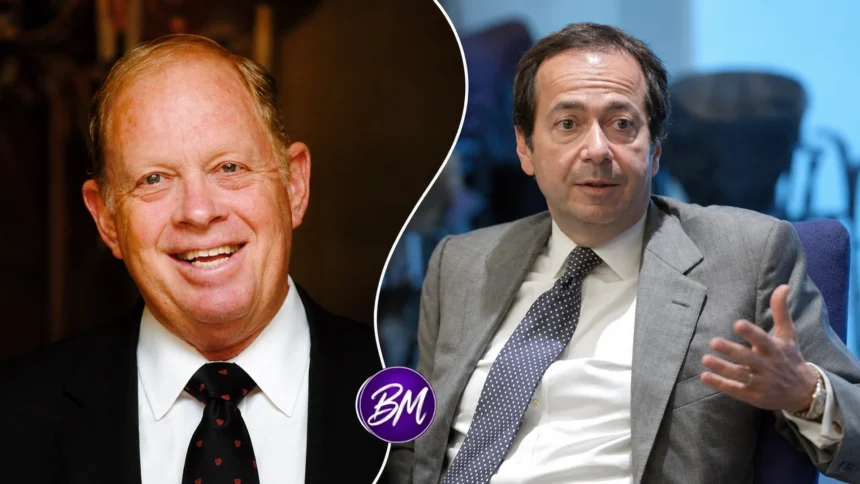
As of November 14, 2026, there is no public confirmation that John Paulson is considering an investment in Richard Peery’s real estate business. The company announcements, filings, and property reporting reviewed for this article identify no talks, offer, or agreement involving Paulson and Peery-Arrillaga. Paulson has made direct real estate investments, including a resort project in Puerto Rico. Peery’s firm has continued to lease commercial space in Silicon Valley. Those records document two separate businesses.
What is Richard Peery’s real estate business?
Richard “Dick” Peery built Peery-Arrillaga with longtime business partner John Arrillaga. They bought land around what became Silicon Valley, including former fruit orchards near Stanford University, and developed it into office parks. As the technology industry grew, the firm leased space to companies including Intel, Apple, Facebook, and Google. Arrillaga died in 2022.
One transaction shows how the partnership turned that strategy into a large commercial portfolio. In 2006, RREEF, then a real estate investment division of Deutsche Bank, bought 119 buildings from Peery-Arrillaga. The sale covered about 5.3 million square feet of offices and research space across five Silicon Valley cities. The parties did not announce a sale price at the time. The San Francisco Chronicle reported an industry estimate of around $1.1 billion.
The firm still lists commercial properties in the Bay Area. In its second-quarter 2026 office report, Colliers identified Peery & Arrillaga as the landlord on a roughly 126,000-square-foot lease at 580 North Mary Avenue in Sunnyvale. Colliers kept the tenant’s name confidential, while July reporting identified the tenant as Apple. That record describes a company leasing space in a building. It gives no indication of an ownership stake changing hands.
On the East Coast, Jerry Speyer’s real estate career offers another example of how a developer built a major commercial property portfolio.
Where has John Paulson actually invested in real estate?
Paulson became widely known for taking positions that gained value when subprime mortgage securities fell. He has also invested directly in property. In 2020, Reuters reported that he was returning outside investor capital and converting Paulson & Co. into a private investment office. That shift helps explain why his old reputation as a hedge fund manager tells only part of the story of what he invests in today.

After betting against subprime mortgages, Paulson bought shares in major banks and backed the IndyMac acquisition. Both moves are covered in our article on Andy Cecere and John Paulson’s approaches to banking.
A documented example is Bahía Beach in Puerto Rico. Paulson Puerto Rico says its business began with a 2013 investment in the St. Regis Bahía Beach Resort. In December 2024, Four Seasons announced that it would manage the property in partnership with Paulson Puerto Rico. The resort reopened under the Four Seasons name in November 2025 after refurbishment. The announcements identify the property, the parties, and their roles. Four Seasons’ partnership announcement.
Barry Sternlicht’s Starwood Capital Group also expanded into hospitality, buying Westin in 1995 as it built its hotel business.
Paulson Puerto Rico also outlined nearly $1 billion in planned investment over the coming years in its 2026 strategy announcement. The company framed that plan around expanding its operations and projects in Puerto Rico. It did not name Peery-Arrillaga or identify a Silicon Valley acquisition. The figure describes planned spending across the company’s business lines.



Can SEC filings show whether Paulson is considering a deal?
Paulson & Co. files Form 13F, a quarterly report that shows an investment manager’s positions in certain securities. The SEC’s list primarily covers exchange-traded stocks, certain funds, and some other securities. A direct purchase of an office building or an ownership stake in a private real estate firm would generally fall outside the report’s scope. A 13F is also a snapshot of holdings at the end of a quarter, so it cannot reveal what a firm is considering.
Different records answer different questions. A company statement or credible reporting that identifies the parties could establish that talks were underway. A recorded deed could identify the legal buyer of a building after a sale. An announcement naming a new investor could establish who bought into the company itself. Those are three distinct events. Peery-Arrillaga’s 2006 portfolio sale shows why the distinction matters. The transaction covered a defined group of buildings, and the reporting named the buyer.
Our article on David Lawler and Satya Nadella examines a similar investment claim and explains what bp and Microsoft actually announced.
What can readers conclude about Richard Peery and John Paulson?
The public record supports a straightforward answer. Paulson has invested in real estate, but there is no public evidence that he is pursuing an investment in Peery-Arrillaga. Peery built the Silicon Valley business with John Arrillaga. Paulson’s publicly announced Bahía Beach partnership involved Four Seasons. Those are the parties and projects the available records identify.